Cosmetic Bag Manufacturer Evaluation Checklist: How B2B Buyers Can Reduce Sourcing Risk
Short answer: A reliable cosmetic bag manufacturer should be evaluated through evidence, not a catalog alone. Check product-development capability, written specifications, sample control, material and compliance documentation, in-process quality checks, capacity transparency, commercial terms, and communication before approving bulk production.
For a beauty brand, retailer, wholesaler, or Amazon seller, the wrong factory decision can create more than a late shipment. It can produce inconsistent color, weak seams, packaging errors, or a sample that does not match the bulk order. This cosmetic bag manufacturer evaluation checklist turns the first supplier conversation into a documented decision process.
What should you verify before choosing a cosmetic bag manufacturer?
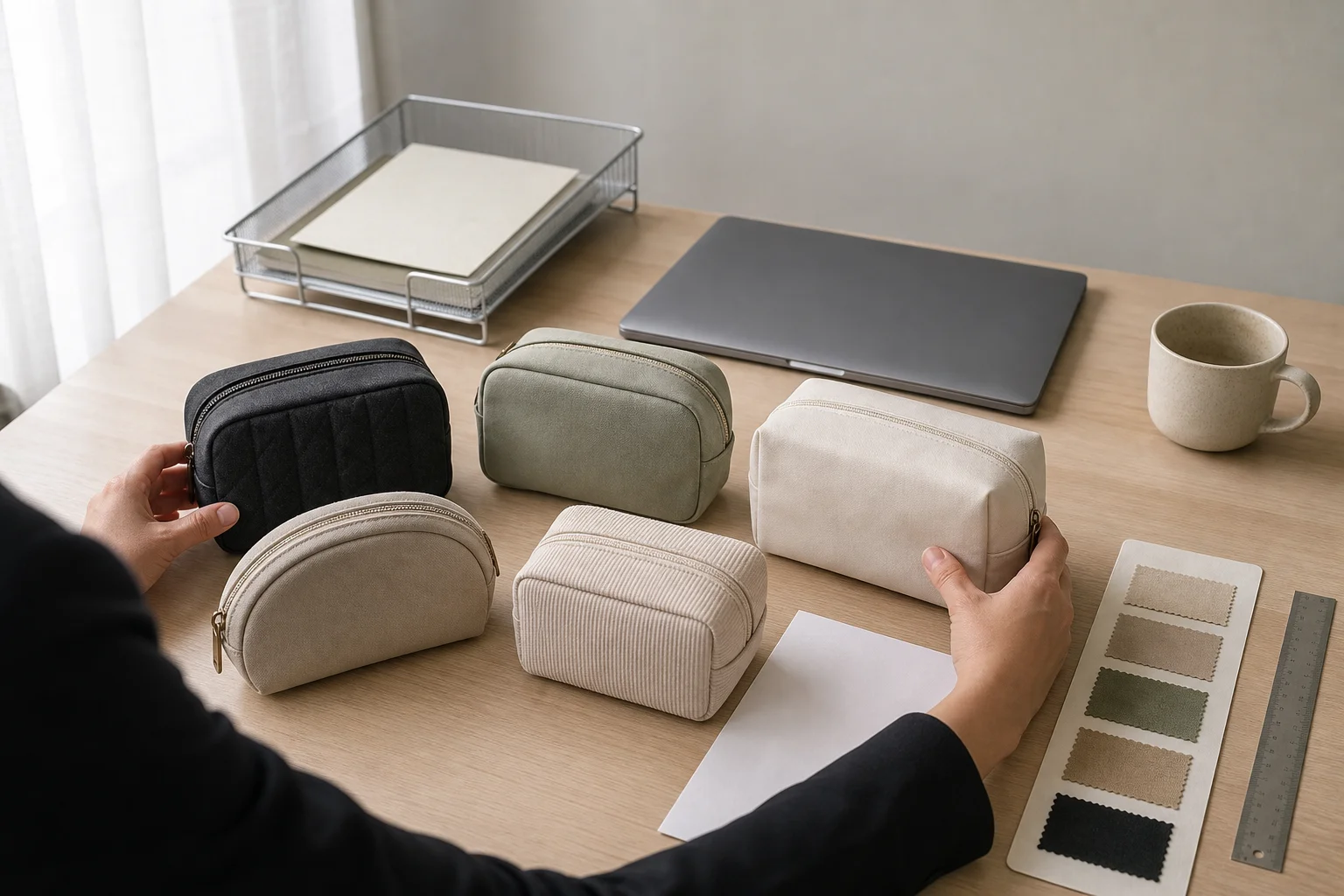
Start with a short evidence pack. Ask the supplier to identify the legal manufacturing entity, production location, product categories, customization scope, quality-control process, sample workflow and commercial assumptions. Keep each answer attached to the project record so that the quotation, sample and purchase order use the same facts.
Can the factory make your construction, not just show a similar style?
Review whether the supplier can work from a drawing, reference sample or brief. For cosmetic bags, the brief may include opening direction, pocket layout, lining, zipper type, handle, logo method, packaging and intended retail use. BEARKY publicly presents OEM/ODM services and a customization workflow covering design, material selection, sampling, production, inspection and delivery; buyers should still confirm the exact scope for their own design.
Useful evidence includes:
A marked-up specification sheet with every visible component named.
A construction drawing or approved reference sample.
A written list of which changes are possible after sampling and which changes create new tooling or cost.
A clear logo, pattern and packaging approval process.
See BEARKY’s customization service page and company profile for the publicly described workflow and product categories.
How should you test a cosmetic bag supplier’s sample process?
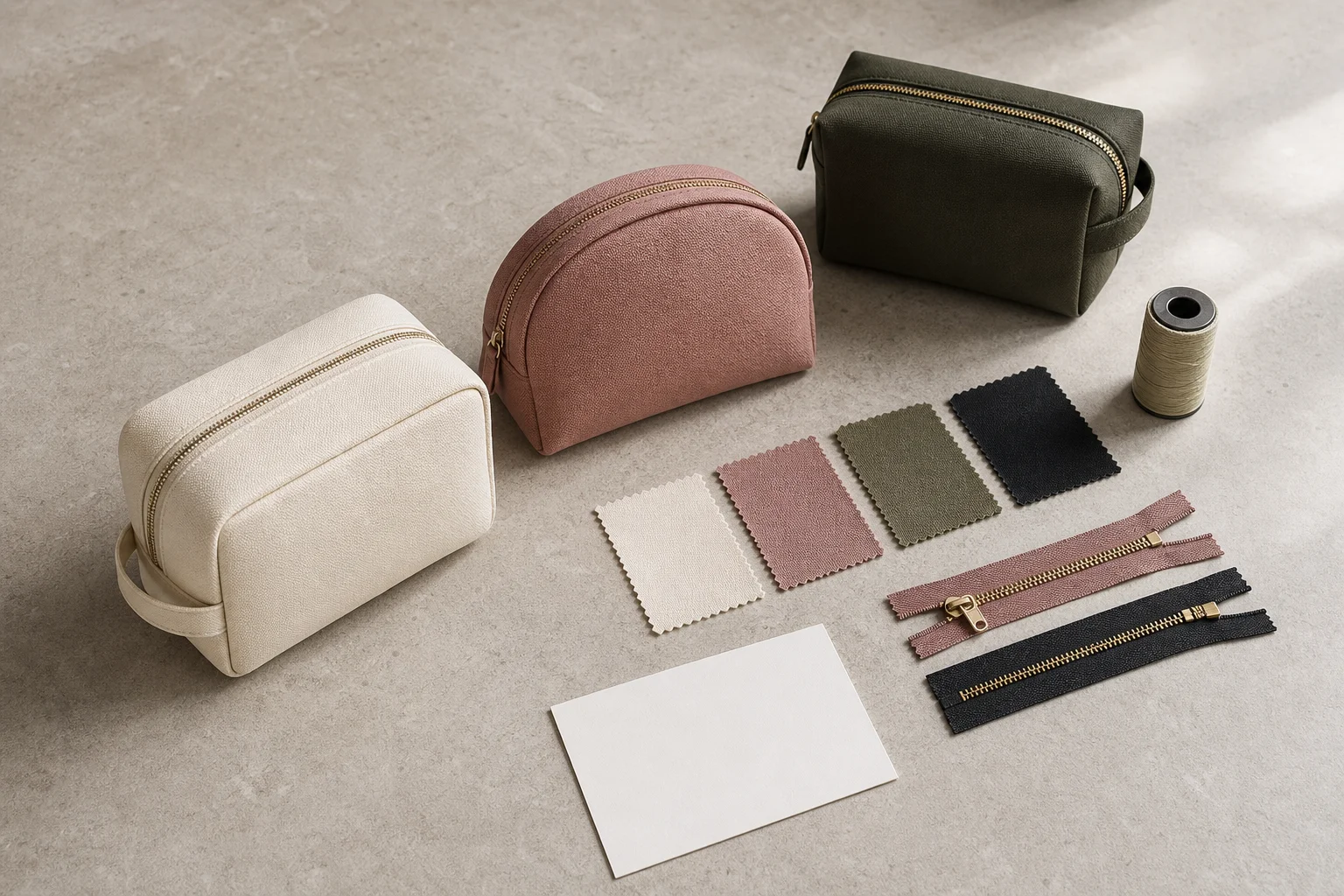
A sample is not only a visual preview. It is the first controlled version of the product specification. Before approving it, compare the prototype against the brief line by line and record changes as revision numbers rather than informal chat messages.
Which sample questions should a buying team ask?
Does the sample use the intended outer material, lining and hardware?
Do the opening, pockets, seams and handle match the approved drawing?
Does the logo or pattern placement match the artwork and repeat correctly?
Are color references recorded under the actual fabric and finishing method?
What changes are still open, and which version is the golden sample?
How will the approved sample be used during in-process and final inspection?
Ask for a sample approval sheet that includes front, back, inside and close-up photographs. If a hidden area cannot be checked from the sample, mark it for physical inspection rather than assuming it is correct.
How do MOQ and production timing affect the supplier decision?
MOQ should be assessed together with the business model, not treated as the only price filter. A beauty brand testing a new gift set may need a different commercial route from a wholesaler replenishing an established SKU. Ask the manufacturer to separate ready-to-ship quantity, logo-customized quantity and fully customized quantity, because they may carry different material, setup and approval requirements.
| Commercial question | Evidence to request | Why it matters |
|---|---|---|
| What is the MOQ for this exact construction? | Written MOQ by product, material, color and branding method. | Prevents a low headline MOQ from changing after design approval. |
| What is included in the quoted price? | Sample, logo setup, packaging, inspection, freight and tax assumptions. | Makes supplier comparisons more accurate. |
| What is the approval-to-production sequence? | Milestones from artwork approval to sample, bulk production and inspection. | Shows where delays can occur. |
| Which timeline is a commitment and which is an estimate? | Project-specific written schedule with assumptions. | Protects launch and replenishment planning. |
Public BEARKY product pages display product-specific commercial information, but the figures are not uniform across every page. Treat MOQ and timing as project variables and request a current written quotation before publishing or ordering.
What quality-control evidence should a cosmetic bag factory provide?
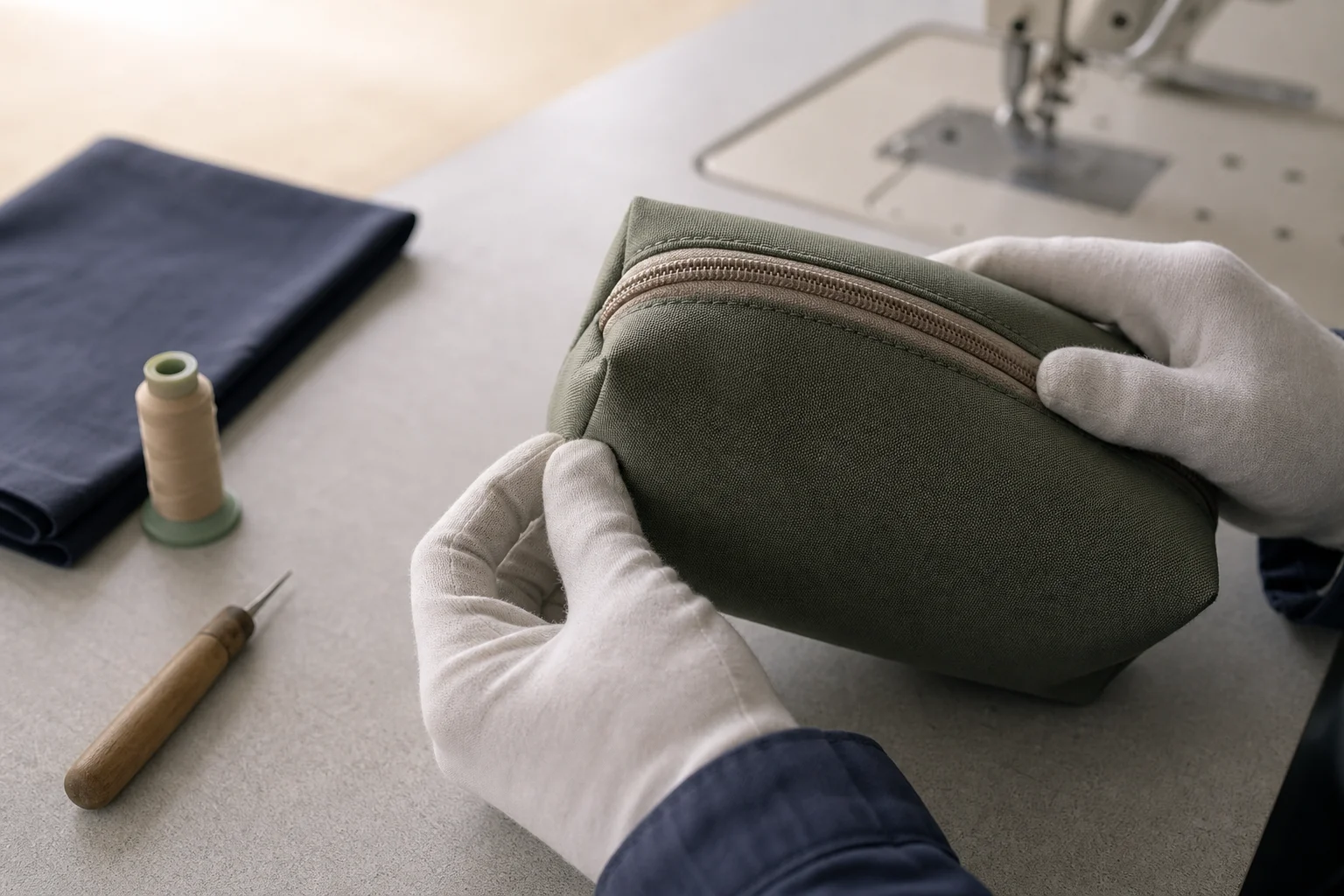
Look for a control system that starts with incoming material and continues through packing. BEARKY’s public quality-control page describes five stages: raw-material inspection, in-process inspection, semi-finished checks, final inspection and pre-packaging inspection. The same page publicly lists compliance and audit items; your team should request the current documents and confirm that they apply to the exact material and product being ordered.
Can the supplier connect inspection records to the golden sample?
That is a practical test of process maturity. Ask how inspectors record defects, what acceptance standard they use, how rework is handled, and who approves shipment. For high-risk launches, consider an agreed third-party inspection or an independent pre-shipment check. The OECD due-diligence guidance is a useful framework for asking how a supply chain identifies, prevents and addresses risks.
How should you review compliance and responsible-sourcing claims?
Separate three questions: what the factory says it can supply, what a current test report or audit document verifies, and what your destination market requires. For chemical or product-safety questions, use the applicable regulation and product documentation rather than relying on a generic “eco” or “compliant” label.
Ask for document number, issue date, scope, tested material and matching product reference.
Confirm whether the document covers the finished bag, a fabric, a coating or only a component.
Check whether your logo ink, lining, hardware and packaging introduce additional requirements.
Use the European Commission REACH reference when EU chemical obligations are relevant.
For environmental marketing copy, consult the FTC Green Guides and keep claims specific and substantiated.
Editor review: BEARKY’s public pages contain certification, compliance, capacity and lead-time statements. Verify the current certificate names, scope, production-line count, monthly output, MOQ and project schedule with BEARKY before publication or purchase.
How can you compare two cosmetic bag manufacturers fairly?
Use the same brief, the same sample questions and the same evidence standard. Score each supplier only when a claim is supported by a document, sample, photograph, inspection record or written commercial term.
| Decision area | Pass condition | Follow-up if unclear |
|---|---|---|
| Product fit | Sample matches the construction brief. | Request a revised sample or marked-up drawing. |
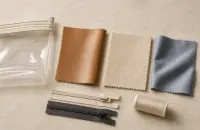
| Material control | Material, color and finish are named and approved. | Request swatches and a signed material sheet. |
| Quality | Inspection stages and defect handling are documented. | Request the inspection checklist and escalation route. |
| Compliance | Documents match the intended market and product scope. | Ask for current reports before using any claim. |
| Commercial fit | MOQ, price assumptions and timing are written. | Request an order-specific quotation. |
| Communication | Questions receive complete, consistent answers. | Run one final written confirmation round. |
What questions should buyers ask a cosmetic bag manufacturer?
What should I send in the first RFQ?
Send the target product, dimensions or reference sample, material direction, structure, logo method, packaging, estimated quantity, destination market and required decision date.
Should I approve a bulk order from photos alone?
No. Use a physical or fully documented golden sample and agree how the sample will control bulk inspection.
Is a lower MOQ always the better option?
No. Compare unit economics, setup cost, material availability, quality risk and the quantity needed for a meaningful market test.
How do I check whether a compliance claim applies to my bag?
Match the document to the finished product, material, color, coating, logo method and destination market. Ask for current evidence.
What is the best way to compare OEM and ODM?
Use OEM when your specification is defined and ODM when you want to adapt an existing design direction. Confirm ownership, exclusivity and approval rights in writing.
When should I request third-party inspection?
Consider it when the launch is time-sensitive, the order value is material, the product has multiple construction points, or the buyer and factory need an independent release decision.
Ready to evaluate a custom cosmetic bag project?
Send BEARKY your design file, reference sample or product brief. Ask for a project-specific quotation, sample plan, material options, inspection method and current compliance documents through the BEARKY contact page.

.jpg)