
If you have more artworks or information of your projects to share with us,
Please sent it to [email protected]
For beauty brands, retailers, and promotional buyers, a sustainable cosmetic bag is more than a recycled-material claim. It is a sourcing decision that balances verified material content, safe finishes, construction durability, order economics, and a credible end-of-life story. This 2026/2027 B2B guide explains how to specify, sample, audit, and scale an eco-friendly cosmetic bag program with an experienced OEM partner such as BEARKY.
Specify the whole product: Confirm the shell, lining, webbing, zipper tape, thread, foam, coating, labels, and packaging—not only the headline fabric—meet your sustainability brief.
Ask for evidence: Request fiber composition records, recycled-content documentation where applicable, color and finish approvals, and test reports aligned with REACH, California Prop 65, and OEKO-TEX requirements.
Match material to use: RPET suits lightweight everyday kits, organic cotton supports a natural hand feel, non-toxic TPU adds wipe-clean performance, and vegan leather creates a premium structured look without animal leather.
Plan MOQ by component: A lower bag MOQ may still require fabric, color, zipper, print, or custom mold minimums. Consolidating colors and selecting stock components can reduce landed cost and risk.
Protect launch timing: Allow 5–10 days for a first prototype after complete artwork and specifications, then reserve time for revisions, testing, production, inspection, and freight.
RPET is made from recycled PET, commonly post-consumer bottles, and offers consistent strength, abrasion resistance, and printability. Buyers should define the target recycled percentage, fabric weight, weave, coating, and certificate or traceability evidence. RPET is a practical choice for pouches, travel organizers, and promotional programs that need color consistency and scalable supply.
Organic cotton provides a breathable, tactile surface suited to toiletry bags and natural-brand collections. Confirm whether the requirement is certified organic fiber or simply an organic-cotton claim, and check shrinkage, colorfastness, pilling, and wet-rub performance. A cotton canvas specification should state weight, weave, dye standard, lining, and care label requirements.
TPU can create a transparent, water-resistant, and easy-clean cosmetic pouch. “Non-toxic” should be treated as a testable specification: define restricted substances, plasticizer expectations, odor limits, surface tack, cold-flex performance, and the exact film thickness. Ask the factory to test the finished bag, not only incoming film.
Vegan leather can deliver a structured premium appearance for private-label collections. Compare water-based PU, solvent-controlled PU, and other bio-based or recycled options by hydrolysis resistance, flex cracking, odor, surface durability, and environmental documentation. Avoid vague “eco leather” language unless the composition and backing are clearly documented.
Brief and tech pack: Set dimensions, capacity, opening, compartments, material composition, lining, hardware, logo artwork, packaging, and target market.
Material review: Approve swatches, colors, recycled or organic content, coating, zipper and trim options, and compliance test plan.
Pattern and prototype: The factory converts the brief into patterns and makes an initial sample. A normal first sampling window is 5–10 days after all inputs are confirmed.
Revision and pre-production approval: Record comments by measurement, stitch, trim, logo, and function. Approve a sealed reference sample before bulk cutting.
Cutting and sewing: Control lay planning, panel matching, seam allowance, stitch density, reinforcement, zipper installation, edge binding, and thread trimming.
Finishing and packing: Complete logo application, cleaning, inspection, folding, carton labeling, and packaging with the agreed recycled or reduced-material pack.
Final inspection: Use an agreed AQL or statistically defined inspection plan, verify dimensions and appearance, and retain production and test records before release.
MOQ should be evaluated at three levels: the finished bag, each material/color, and each custom component. Stock RPET or cotton colors and standard zippers can support a lower entry quantity; custom dyed fabric, molded hardware, special prints, and unique packaging may raise the minimum. Ask for a tiered quote at your expected launch quantity plus a scale quantity, with tooling, sampling, testing, packaging, and freight shown separately.
For a low-MOQ launch, simplify the construction, use available trims, limit color count, consolidate artwork, and approve one master size before extending the range. Build the critical path around the 5–10 day sample period, revision buffer, material booking, bulk production, third-party testing, final inspection, and shipping. Never treat a sample approval date as a confirmed ship date until materials and capacity are booked.
Request a pre-production compliance plan covering the finished product and relevant components. REACH screening helps address restricted chemicals in textiles, coatings, plastics, inks, and metal trims. For goods sold in California, Prop 65 evaluation should consider applicable exposure warnings and substances in inks, PVC/TPU, hardware, and coatings. OEKO-TEX documentation can support textile safety claims when the certificate scope, product class, and validity match the supplied material or finished item.
Operational inspection should cover material identity, color and shade, odor, stains, delamination, seam strength, skipped stitches, loose threads, zipper function, logo position, dimensions, pocket construction, load capacity, and packaging count. Agree acceptance limits in writing and keep an approved reference sample, test reports, batch records, and corrective-action photos.
There is no universal winner. RPET is strong and scalable, organic cotton offers a natural tactile story, TPU provides wipe-clean functionality, and vegan leather supports a structured premium design. Choose by use case, required testing, durability, target price, and end-of-life or recycled-content evidence—not by marketing label alone.
Yes, a low-MOQ plan is usually most practical when buyers select stock materials and trims, limit colors, and avoid new molds or complex packaging. Ask for MOQ by finished SKU and by component, then compare a pilot run with the expected repeat-order quantity before approving the tech pack.
Allow approximately 5–10 days for the first sample once measurements, artwork, materials, and construction details are complete and approved for development. Additional rounds may be needed for fit, logo, color, or function. Confirm whether the quoted time includes material preparation and courier transit.
Start with a risk-based plan for REACH and, when relevant, California Prop 65. For textiles and skin-contact applications, OEKO-TEX documentation may be appropriate. Add colorfastness, abrasion, seam or handle strength, zipper cycling, odor, hydrolysis, and film or coating tests according to the chosen material and destination market.
Ask for composition, supplier or certificate records, batch traceability, and test reports that identify the submitted material or finished product. Compare the documents with the approved sample and purchase order. Make claims specific—such as recycled polyester content or certified organic cotton—and avoid unsupported “biodegradable” or “non-toxic” wording.
Start with BEARKY's cosmetic bag collection to compare formats, then review custom OEM and private-label options. For compliance-led programs, see the quality control and certifications information. Share your target quantity, dimensions, eco-material preference, destination market, artwork, and deadline through the BEARKY contact page for a focused quotation and sampling plan.
Author: SALLY | B2B Sourcing Specialist at BEARKY
Ready to develop a verified sustainable cosmetic bag? Send your tech pack or product brief to BEARKY for material recommendations, MOQ options, a 5–10 day sampling plan, compliance guidance, and an OEM quotation.

500 (Min. Order)
Wholesale & Bulk Price: $1 - 3/PC
Accept Customized Logo / Color / Material
Heart-Quilted Cosmetic Bag – Soft and Stylish Makeup Organizer Pouch
Heart-quilted cosmetic organizer with a soft-touch finish for beauty, gifting and travel collections. Add your logo, Pantone color and custom retail packaging with Bearky OEM service.
500pcs (Min. Order)
Wholesale & Bulk Price: $0.95/pc
Accept Customized Logo / Color / Material
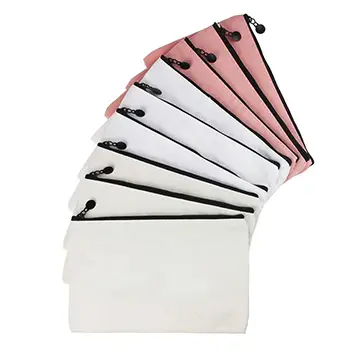
RPET cotton makeup cosmetic bag
This custom cotton zipper pouch combines eco-friendly cotton canvas, lightweight portability, and professional OEM customization options. It is an engineered sustainable packaging solution specifically designed for cosmetic brands, promotional gifts, luxury retail collections, and travel organization projects.

15 Nov 2026
A technical B2B buyer's guide to custom clear TPU cosmetic and toiletry bags, comparing TPU versus PVC performance, TSA 3-1-1 liquids rule compliance, high-frequency welded seam engineering, and chemical safety standards.
15 Nov 2026
A practical B2B guide for beauty brands and procurement managers on cosmetic bag OEM MOQ structures, tiered pricing breakdown (BOM, direct labor, tooling amortization), and actionable strategies to minimize upfront sampling and manufacturing costs.
15 Nov 2026
A detailed B2B manufacturing and merchandising guide for beauty brands, boutique retailers, and e-commerce sellers sourcing custom quilted cosmetic bags. It explores outer fabric selection (cotton, RPET nylon, velvet, vegan PU), batting gram weights (80–160 gsm), CNC quilting stitch patterns (diamond, channel, wave, bespoke logos), spill-resistant linings, and holiday gift set packaging strategies.
15 Nov 2026
A comprehensive B2B quality control guide for beauty brands, retailers, and wholesalers sourcing custom cosmetic bags. It details the 5-step factory inspection workflow (IQC to OQC), AQL 2.5/4.0 defect classification standards, tensile and zipper cycle testing protocols, golden sample verification, and 100% needle detection to prevent manufacturing defects in overseas production.
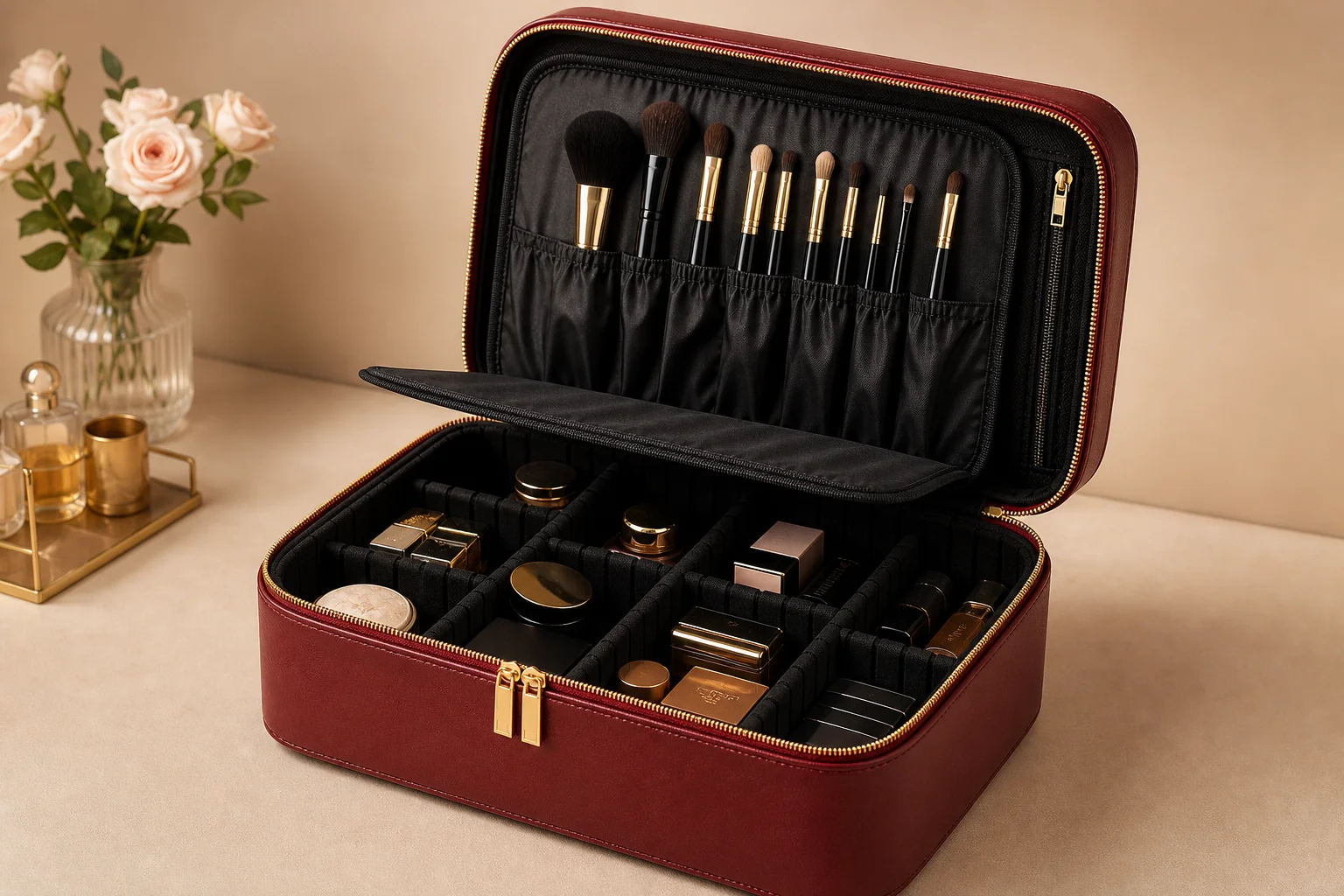
15 Nov 2026
A B2B sourcing and manufacturing guide to custom cosmetic train cases and structured vanity organizers for beauty brands, department store retailers, and e-commerce sellers. Compares structural cores (rigid MDF vs. semi-rigid EVA vs. double-decker hybrid), PU leather grades, stain-resistant wipe-clean linings, modular EVA dividers, handle load testing, and Amazon FBA packaging nesting optimization.
.jpg)
Ready to ship and 10% off
Customizable Makeup Bags: Personalize with your logo, colors, and sizes to suit your business needs
View MoreYou can tell us if you have customized needs, We'll replay you within 6 hours.
If you have more artworks or information of your projects to share with us,
Please sent it to [email protected]
Your Name *
Company Name
Your Email *
Online Chat ID(Replay within 10 minutes)
Your Phone
Your Country *
Your Message *
Upload Your File

Best cosmetic bag manufacturers in China
Phone: 0086-13928791997
Email: [email protected]
Skype: sallypeng123
WhatsApp: +8613928791997
No.29-43 Gegang Road Shiling Town Huadu Area Guangzhou Guangdong China 510800
Links: Canvas Bag Manufacturer